


How to Identify Chords on Sheet Music: Quick Guide
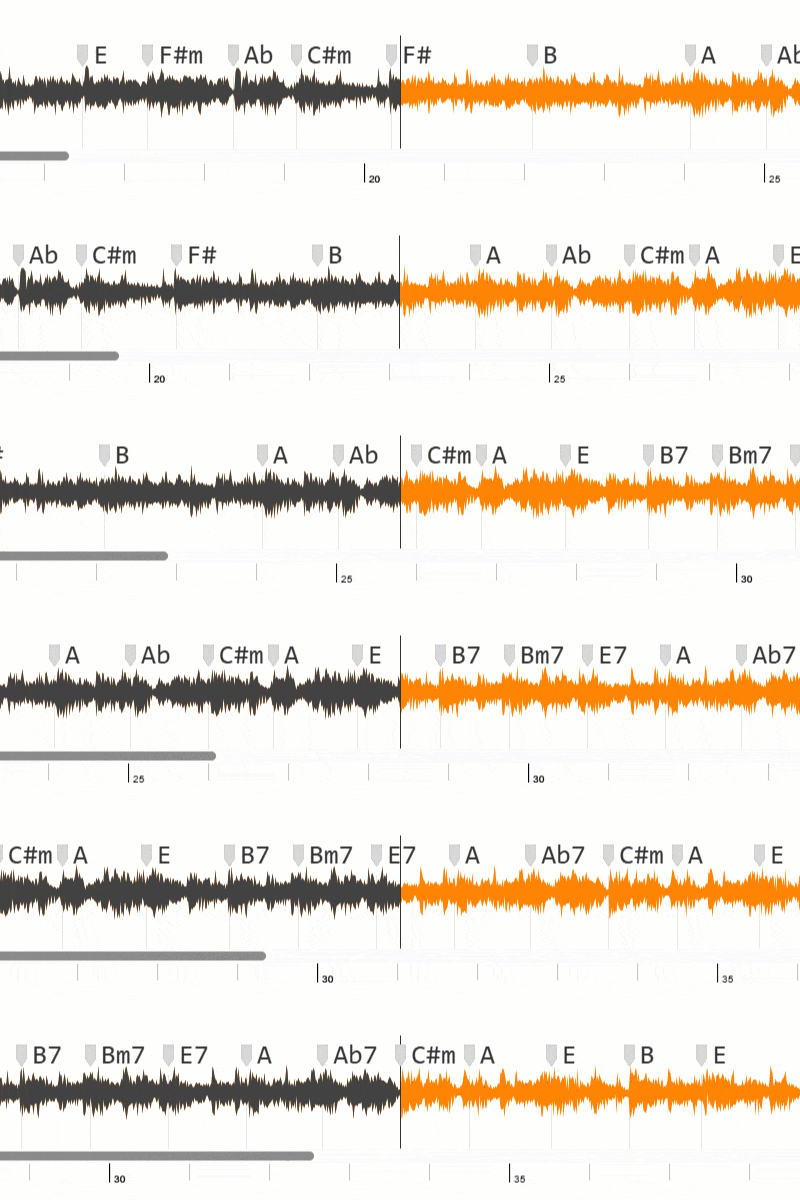
If you need how to identify chords on sheet music, start with the symbols in front of you. Modern scores often print chord letters above the staff, while classical editions may use Roman numerals or figured bass. In all cases, the goal is the same: connect written harmony to the sound you expect.
When you read pop or jazz lead sheets, you usually see letter names such as C, Am, or G7. When you study classical harmony, you may translate Roman numerals into chords in a specific key. Therefore, a flexible approach helps you move between styles without confusion.
What “How to Identify Chords on Sheet Music” Covers
How to identify chords on sheet music includes reading chord symbols, stacking notes into triads and seventh chords, and confirming quality (major, minor, diminished, augmented). It also means checking the key signature so names match the tonal center.
In addition, you may compare the written bass line with chord symbols. If both agree, you can trust the harmony faster. If they disagree, slow practice usually reveals the correct interpretation.
Common Ways Chords Appear on Sheet Music
1) Chord Symbols Above the Staff
Lead sheets and educational arrangements often place letters above the melody. First, read left to right. Next, notice repeats and endings so you do not miss a change at the turnaround.
2) Roman Numerals and Analysis
Harmony courses use numerals such as I, IV, V, or ii-V-I progressions. In practice, you translate those numerals into chords based on the key. Consequently, key awareness becomes essential.
3) Written-Out Harmony in the Staff
Sometimes chords are not labeled. Instead, you see stacked notes in piano notation. Then, you identify the chord by collecting letter names from bottom to top and naming the quality.
Step-by-Step: How to Identify Chords on Sheet Music
- First, confirm the key signature and clef.
- Next, locate chord symbols or the lowest note in each harmony.
- Then, name the root and chord type (major, minor, seventh, etc.).
- Finally, play or imagine the chord to verify it matches the style.
This sequence keeps errors small. After that, you can add inversions and voicings that fit guitar or piano.
Practical Tips for Faster Reading
Tip 1: Track the Bass First
The bass often states the root or a clear inversion. So, use it as a reliable anchor when symbols are dense.
Tip 2: Watch Accidentals
One sharp or flat can change a chord entirely. In other words, read carefully near modulations and secondary dominants.
Tip 3: Use Short Practice Loops
Loop two measures at a time. Meanwhile, say the chord names out loud to build memory.
Common Mistakes When Identifying Chords on Sheet Music
Mistake 1: Ignoring the Key Signature
Chord labels depend on context. Therefore, always relate symbols to the current key unless the score shows a clear key change.
Mistake 2: Confusing Slash Chords
Notation like G/B means a G chord with B in the bass. Often, beginners miss the bass letter and guess the wrong shape.
Mistake 3: Rushing Complex Extensions
Symbols such as Cmaj9 or Fm7(b5) need careful spelling. However, if you break them into thirds, identification becomes easier.
Who Benefits from Learning How to Identify Chords on Sheet Music?
- Piano students reading lead sheets and arrangements.
- Guitar players following chord charts with rhythm notation.
- Singers who need harmonic context from a score.
- Teachers preparing clear examples for lessons.
- Composers and arrangers checking harmonic flow.
Final Thoughts
Overall, how to identify chords on sheet music is a trainable skill. When you combine careful reading with short verification at the instrument, symbols become meaningful faster.
If you stay consistent with key signatures, bass motion, and chord quality, your reading becomes more accurate, your practice becomes more efficient, and your confidence grows with every page you finish.